Maratek Environmental Solvent Recycling Services

How to Compare Solvent Recovery Equipment: Compliance Fit, Payback Drivers, and System Design

Most manufacturers start looking at solvent recovery equipment for one of two reasons: solvent and disposal costs are rising, or compliance and waste-generator status are becoming harder to manage. The right system is rarely the one with the highest recovery claim. It is the one that fits the waste stream, the facility’s compliance requirements, and the way the business wants to fund it.
Choosing well means treating the decision as an operational and compliance exercise first. A system that looks strong on a brochure but cannot handle the actual chemistry, volume, or safety constraints will underperform and can create new problems. The comparison framework below focuses on the factors that determine whether a system delivers lasting value.
Start with the stream, not the brochure
The first filter is technical fit. Useful questions include:
- What solvents are in the waste (single solvent, blend, or mixed)?
- What is the daily or monthly volume?
- What percentage of the waste is non-recoverable sludge or contaminants?
- Are there safety constraints (nitrocellulose, low flash point, explosion-proof requirements, Class I Division 1 areas)?
A system that cannot handle the actual chemistry or volume will underperform no matter how strong the marketing. Automated distillation systems sized to the stream—batch units for lower volumes, continuous or larger systems for higher volumes—tend to deliver more consistent recovery with less operator time. Matching volume and chemistry early avoids the common mistake of oversizing or undersizing, both of which hurt payback and reliability.
For example, a flexographic printer generating a consistent n-propanol / propyl acetate blend at moderate daily volume will usually be better served by a purpose-designed flexo unit than by a general-purpose still. A coatings plant with variable, higher-volume mixed solvents may need a continuous or engineered system. The goal is to confirm the stream characteristics before comparing recovery percentages.
Compliance fit matters as much as recovery rate
On-site recovery changes a facility’s waste profile. The practical questions are:
- Does the system help reduce the number of hazardous waste shipments?
- Can recovered solvent be reused in the process without creating new compliance issues?
- Does the equipment meet relevant safety standards (UL 2208, NFPA 496, or equivalent explosion-proof ratings where required)?
- Will the change support lower waste-generator status or simpler manifesting?
A system that recovers solvent but creates new regulatory friction is a poor trade. The strongest installations reduce both solvent purchases and outbound hazardous waste volumes while staying inside existing permits and safety programs. Fewer shipments also mean less transportation exposure and less administrative time spent on manifests and record-keeping—benefits that are real even if they are harder to quantify than the direct cost savings.
Payback drivers are straightforward
Most of the economic case comes from two places: lower purchases of virgin solvent and lower disposal costs. Secondary benefits (fewer shipments, less administrative time, more predictable operations) are real but harder to quantify. When comparing options, model:
- Current monthly solvent spend
- Current monthly disposal cost
- Expected recovery rate on the specific stream
- Operating cost of the system (energy, maintenance, any service fee)
This is where the funding method becomes part of the comparison. Some plants prefer to purchase and capture 100% of the savings after payback. Others prefer a no-upfront-capital service plan so savings start immediately and the equipment is installed, maintained, and supported by the supplier. Both can work; the right choice depends on capital availability and how quickly the plant needs the cost reduction.
A practical comparison framework
When reviewing proposals, score each option on:
- Technical fit to the actual waste stream and volume
- Safety and compliance alignment
- Expected recovery and resulting solvent + disposal savings
- Operating simplicity and support model
- Funding path (purchase with payback period vs. no-upfront service plan)
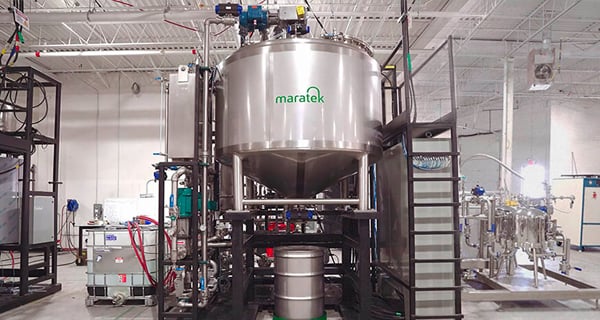
Maratek’s Solvent Saver systems are designed around this logic: automated distillation, systems sized from small batch to higher-volume continuous, safety features for common industrial constraints, and the option to start under the Share the Savings program with no capital outlay. The free ROI calculator on maratek.com lets you run the solvent and disposal numbers against both the service-plan and purchase paths so the comparison is based on your volumes rather than generic claims.

Common questions when comparing systems
- How accurate do the volume and sludge estimates need to be? Directional figures are usually enough for an initial comparison. Most suppliers can refine them with a waste sample.
- What if my solvent blend changes? Systems that handle a reasonable range of common industrial solvents offer more flexibility than highly specialized units.
- Should I prioritize recovery percentage or total cost reduction? Total cost reduction (solvent purchases + disposal + operating cost) is the more useful metric.
The manufacturers that get the best results treat solvent recovery as an operational and compliance decision first, and a purchasing decision second. Start with the stream and the constraints. The equipment and the funding model should follow from those.
If you have any questions about solvent recovery equipment and would like help selecting the optimum equipment for your process, get in touch with Maratek's sales engineers today.

Get a Quote for Maratek Solvent Equipment or Services
Maratek is the Market Leader in Professionally-Engineered Solvent Recycling and Botanical Extraction Technologies.