Maratek Environmental Solvent Recycling Services
How to Build a Business Case That Actually Gets Approved in 2026: Solvent Recycling Equipment ROI

If you're an EHS manager or plant operations leader, you already know solvent recycling equipment makes sense — environmentally and operationally. But getting finance to sign off on the capital expenditure? That's a different conversation entirely.
The truth is, most CAPEX requests for solvent recycling equipment fail not because the ROI isn't there, it's because the business case isn't presented in a way that speaks the language of decision-makers. This guide walks you through how to build one that does.
Why Factories Keep Losing Money on Solvent Management
Before you can justify the investment, it helps to understand where the real cost is hiding.
Many industrial facilities are quietly bleeding money through their solvent disposal practices. Fresh solvent purchases, third-party waste hauling fees, regulatory compliance costs, and liability exposure from improper disposal all add up — fast. In many operations, solvent-related costs can represent tens of thousands to hundreds of thousands of dollars annually, yet they rarely appear as a single line item that gets scrutinized in the way capital equipment does.
That invisibility is part of the problem. Because the costs are distributed across procurement, waste management, and EHS budgets, the total pain is rarely felt at all times — which makes it easy to overlook. Until you add it all up.
What Makes It Hard to Justify the Investment
Here's the irony: the equipment often pays for itself within 12 to 36 months — but the business case gets rejected because it wasn't framed the right way.
Common obstacles include:
- No clear payback period — Decision-makers want to know when they break even, not just that savings "will be significant."
- Missing compliance context — Regulatory risk is real, but it needs to be quantified (potential fines, audit exposure, disposal liability) to move a finance team.
- Underestimating operational savings — Recovered solvents that re-enter the production process reduce fresh solvent purchases directly. That's a hard dollar saving that's often left out of the proposal.
- CAPEX vs. OpEx framing — Sometimes the issue is structural. Presenting the equipment through a lease or financed arrangement can shift the conversation entirely.
- Annual spend on virgin/fresh solvent purchases
- Third-party solvent waste disposal costs (per drum, per year)
- Internal labour costs for handling, storage, and compliance documentation
- Any regulatory fees, manifest costs, or environmental permits tied to solvent waste
- Reduced fresh solvent purchases — Recovered solvent goes back into production, directly offsetting what you'd otherwise buy.
- Dramatically reduced disposal volume — Less waste to haul means lower hauling fees and reduced manifest and compliance burden.
- Lower liability exposure — Every drum that doesn't leave your facility as hazardous waste is a drum that can't come back as an environmental liability.
- Depreciation schedule (typically 5–7 years for industrial equipment)
- Maintenance costs (generally low for well-designed distillation systems)
- Any applicable grants or incentives for environmental equipment in your jurisdiction
- Current cost of compliance documentation and third-party audits
- Potential fine exposure based on your jurisdiction's regulations (your EHS team or environmental counsel can help estimate this)
- Reduction in cradle-to-grave liability once solvent is recovered on-site rather than transported off-site
The good news: every one of these obstacles has a straightforward solution.
Building Your ROI Business Case: Step by Step
Step 1 — Calculate Your Current Solvent Costs
Start with what you're spending today. Pull together:
Add these up. For most mid-size industrial operations, the combined annual cost lands somewhere between $50,000 and $300,000+ depending on volume and solvent type.
This total becomes your baseline — and your opportunity.
Step 2 — Estimate Post-Equipment Savings
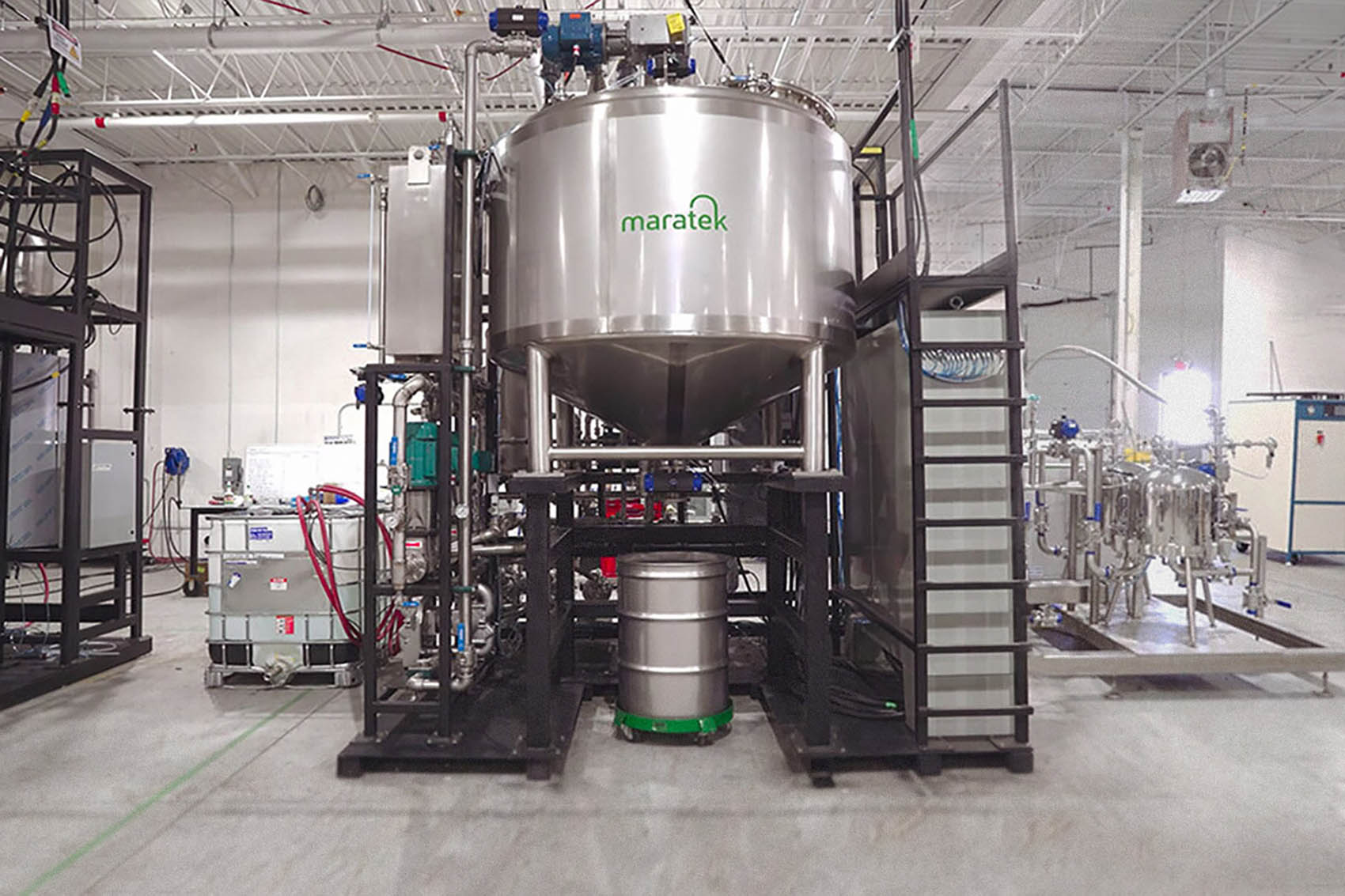
A properly sized solvent recycling system from Maratek can typically recover 85–95% of your waste solvent for reuse. Here's how that translates to savings:
Run the numbers: if you're spending $150,000 per year on solvent management and a recycling system recovers 90% of your waste, your gross annual savings could be in the range of $80,000–$120,000 — depending on your solvent cost and disposal fees.
Step 3 — Calculate Your Payback Period
This is the number your CFO wants to see first.
Simple Payback Period = Equipment Cost ÷ Annual Net Savings
If a system costs $120,000 and generates $90,000 in annual savings, your payback period is approximately 16 months. That's a compelling number for any capital request.
For a more complete picture, factor in:
Step 4 — Quantify Compliance and Risk Reduction
This section often gets left out of CAPEX proposals — but it can be the one that tips the decision.
Regulatory risk is real and increasingly expensive. Improper solvent disposal can trigger fines from environmental agencies, remediation costs, and reputational damage that's hard to put a number on after the fact. When building your business case, include:
Even a conservative estimate of risk reduction strengthens the financial argument significantly.
Step 5 — Present Decision-Ready Outputs
A strong business case doesn't make decision-makers do math. It hands them conclusions.
Structure your presentation to include:
- Executive summary — total current cost, projected savings, payback period (one page)
- Assumptions table — solvent recovery rate, solvent purchase price, disposal cost per unit
- Year-over-year savings projection — a simple 5-year model showing cumulative savings vs. equipment cost
- Compliance risk summary — current exposure, projected reduction
- Equipment recommendation — system specifications matched to your volume and solvent type
Keep it grounded in your actual data. Inflated savings projections are easy to challenge — conservative, well-documented ones are much harder to reject.
A Quick Word on Solvent Type and System Selection
Not all solvents are the same, and not all recycling systems are built to handle every application. The right system for your operation depends on the solvents you use (MEK, acetone, IPA, toluene, xylene, and blends all behave differently in distillation), your volume, and your facility's footprint and power capacity.
Maratek's team works with industrial facilities across North America to match the right system to the right application — and to help develop the supporting documentation you need for CAPEX approval, including ROI projections based on your actual usage data.
Bottom Line
Solvent recycling equipment is one of the strongest ROI investments available to industrial facilities in 2026 — from a financial, operational, and regulatory standpoint. The challenge isn't the numbers; it's presenting them clearly.
A well-structured business case built on real data, a defined payback period, and a clear compliance risk summary gives your organization every reason to say yes.
Ready to run the numbers for your facility? Contact the Maratek team to get a customized ROI analysis based on your current solvent volumes, disposal costs, and operational profile.
Get a Quote for Maratek Solvent Equipment or Services
Maratek is the Market Leader in Professionally-Engineered Solvent Recycling and Botanical Extraction Technologies.