---
title: Solving Solvent Sludge Challenges with Automated Scrapers | Maratek
description: Learn why solvent sludge causes recovery failures and how Maratek’s Flexo 200 and 500 use automated sludge detection and scrapers to eliminate manual cleaning.
image: https://www.maratek.com/hubfs/2026/Blogs/Sludge%20blog.jpeg
---
[** +1 800-667-6272](tel:+18006676272)
[ Maratek Environmental Solvent Recycling Services](https://www.maratekenvironmental.com)
[Request a Quote](https://www.maratek.com/quote-request-today)
[](https://www.maratek.com)
- [Solvent Recovery & Recycling](https://www.maratek.com/industry-solutions)
- Solvent Saver Series
- [Large - SSC](https://www.maratek.com/batch-solvent-recycling-units-continuous)
- [Medium - SSBP](https://www.maratek.com/solvent-saver-batch-premium)
- [Small - SSB](https://www.maratek.com/solvent-recycling-units-batch)
- [FLEXO - SSF](https://www.maratek.com/solvent-saver-flexo)
- [Printing - SSP](https://www.maratek.com/solvent-recycling-units-printing)
- [Solvent Saver Engineered](https://www.maratek.com/engineer-to-order)
- [Fractional Distillation](https://www.maratek.com/fractional-distillation)
- [Share The Savings](https://www.maratek.com/sharethesavings)
- [Industries We Serve](https://www.maratek.com/industry-applications)
- [Botanicals >>](https://www.maratek.com/cannabis-hemp-oil-recovery-extraction-equipment)
- [Hot Air Extraction](https://www.maratek.com/en-ca/vapor-static)
- [Solvent Solutions >>](https://www.maratek.com/cannabis-hemp-solvent-recovery-oil-and-ethanol-recovery-solutions)
- [Ethanol >>](https://www.maratek.com/ethanol-recovery)
- [Hydrocarbon](https://www.maratek.com/hydrocarbon-extraction)
- [CO2 / Winterization](https://www.maratek.com/automatic-winterization)
- [Post Processing >>](https://www.maratek.com/oil-post-processing)
- [Distillation Equipment](https://www.maratek.com/cannabis-distillation-equipment)
- [Winterization](https://www.maratek.com/automatic-winterization)
- [Dewatering & Reproofing](https://www.maratek.com/reproofing-dewatering)
- Other
- [Engineered to Order](https://www.maratek.com/engineer-to-order)
- [Oil Recovery & Recycling](https://www.maratek.com/oil-recycling-equipment)
- [OVR Model](https://www.maratek.com/ovr-oil-recycler)
- [TORS Model](https://www.maratek.com/tors-transformer-oil-regeneration-system)
- [Wastewater Purification](https://www.maratek.com/wastewater-purification-treatment-equipment)
- [Aquamizer M](https://www.maratek.com/wastewater-treatment-aquamizer-m)
- [Aquamizer F](https://www.maratek.com/wastewater-treatment-aquamizer-f)
- [Roto-Disc](https://www.maratek.com/water-purification-roto-disc-liquid-filters)
- [Batteries / NMP](https://www.maratek.com/battery-manufacturing)
- [Cathode VOC Capture](https://www.maratek.com/vapor-capture)
- [Fractional Distillation](https://www.maratek.com/fractional-distillation-battery-solvent)
- [Single Stage Distillation](https://www.maratek.com/single-stage-battery-solvent-recovery)
- Engineering
- [Contract Manufacturing](https://www.maratek.com/contract-manufacturing)
- [Process Design](https://www.maratek.com/process-design)
- [Mechanical Design](https://www.maratek.com/mechanical-design)
- [Project Execution](https://www.maratek.com/project-execution)
- About Us
- [Contact Us](https://www.maratek.com/contact-us)
- [About Maratek](https://www.maratek.com/about)
- [Share the Savings](https://www.maratek.com/sharethesavings)
- Learn
- [Resources](https://www.maratek.com/resources)
- [Industrial Blog](https://www.maratek.com/blog)
- [ROI Calculator](https://www.maratek.com/roi-calculator)
- [FAQ](https://www.maratek.com/faq)
- [Parts & Service](https://www.maratek.com/parts-and-services)
- [Partnership Opportunities](https://www.maratek.com/partnership-opportunities)
- [Sales Terms](https://www.maratek.com/sales-terms)
- [Careers](https://www.maratek.com/careers)
- [Contact Us](https://www.maratek.com/contact-us)
- [Solvent Recovery & Recycling](https://www.maratek.com/industry-solutions)
- Solvent Saver Series
- [Large - SSC](https://www.maratek.com/batch-solvent-recycling-units-continuous)
- [Medium - SSBP](https://www.maratek.com/solvent-saver-batch-premium)
- [Small - SSB](https://www.maratek.com/solvent-recycling-units-batch)
- [FLEXO - SSF](https://www.maratek.com/solvent-saver-flexo)
- [Printing - SSP](https://www.maratek.com/solvent-recycling-units-printing)
- [Solvent Saver Engineered](https://www.maratek.com/engineer-to-order)
- [Fractional Distillation](https://www.maratek.com/fractional-distillation)
- [Share The Savings](https://www.maratek.com/sharethesavings)
- [Industries We Serve](https://www.maratek.com/industry-applications)
- [Botanicals >>](https://www.maratek.com/cannabis-hemp-oil-recovery-extraction-equipment)
- [Hot Air Extraction](https://www.maratek.com/en-ca/vapor-static)
- [Solvent Solutions >>](https://www.maratek.com/cannabis-hemp-solvent-recovery-oil-and-ethanol-recovery-solutions)
- [Ethanol >>](https://www.maratek.com/ethanol-recovery)
- [Hydrocarbon](https://www.maratek.com/hydrocarbon-extraction)
- [CO2 / Winterization](https://www.maratek.com/automatic-winterization)
- [Post Processing >>](https://www.maratek.com/oil-post-processing)
- [Distillation Equipment](https://www.maratek.com/cannabis-distillation-equipment)
- [Winterization](https://www.maratek.com/automatic-winterization)
- [Dewatering & Reproofing](https://www.maratek.com/reproofing-dewatering)
- Other
- [Engineered to Order](https://www.maratek.com/engineer-to-order)
- [Oil Recovery & Recycling](https://www.maratek.com/oil-recycling-equipment)
- [OVR Model](https://www.maratek.com/ovr-oil-recycler)
- [TORS Model](https://www.maratek.com/tors-transformer-oil-regeneration-system)
- [Wastewater Purification](https://www.maratek.com/wastewater-purification-treatment-equipment)
- [Aquamizer M](https://www.maratek.com/wastewater-treatment-aquamizer-m)
- [Aquamizer F](https://www.maratek.com/wastewater-treatment-aquamizer-f)
- [Roto-Disc](https://www.maratek.com/water-purification-roto-disc-liquid-filters)
- [Batteries / NMP](https://www.maratek.com/battery-manufacturing)
- [Cathode VOC Capture](https://www.maratek.com/vapor-capture)
- [Fractional Distillation](https://www.maratek.com/fractional-distillation-battery-solvent)
- [Single Stage Distillation](https://www.maratek.com/single-stage-battery-solvent-recovery)
- Engineering
- [Contract Manufacturing](https://www.maratek.com/contract-manufacturing)
- [Process Design](https://www.maratek.com/process-design)
- [Mechanical Design](https://www.maratek.com/mechanical-design)
- [Project Execution](https://www.maratek.com/project-execution)
- About Us
- [Contact Us](https://www.maratek.com/contact-us)
- [About Maratek](https://www.maratek.com/about)
- [Share the Savings](https://www.maratek.com/sharethesavings)
- Learn
- [Resources](https://www.maratek.com/resources)
- [Industrial Blog](https://www.maratek.com/blog)
- [ROI Calculator](https://www.maratek.com/roi-calculator)
- [FAQ](https://www.maratek.com/faq)
- [Parts & Service](https://www.maratek.com/parts-and-services)
- [Partnership Opportunities](https://www.maratek.com/partnership-opportunities)
- [Sales Terms](https://www.maratek.com/sales-terms)
- [Careers](https://www.maratek.com/careers)
- [Contact Us](https://www.maratek.com/contact-us)
# Why is Sludge the Biggest Obstacle in Solvent Recovery and How Do You Automate the Clean-up?
Posted on March 11, 2026 by [Colin Darcel](https://www.maratek.com/blog/author/colin-darcel)
- [Tweet](https://twitter.com/share)
####  Introduction: The "Messy" Reality of Solvent Distillation
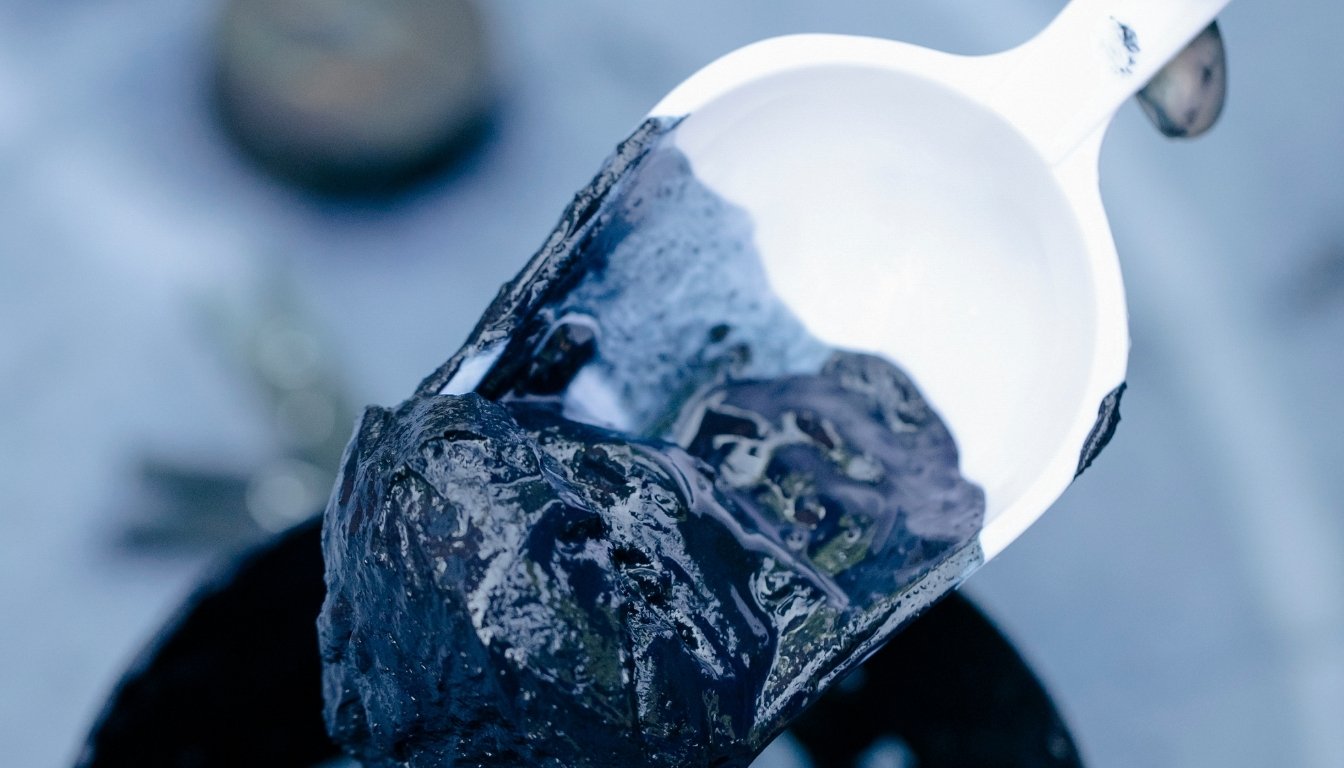
In any distillation process, the goal is simple: separate the pure solvent from the contaminants. However, once the pure solvent vaporizes and leaves the tank, what remains is sludge.
For many industrial operators, this sludge is a nightmare. It is often thick, viscous, and highly adhesive. If not managed correctly, it can bake onto the walls of your recovery unit, leading to decreased efficiency, frequent downtime, and even safety risks. At Maratek, we believe you shouldn't have to "fight" your equipment to keep it clean. That is why our Flexo 200 and Flexo 500 systems are engineered with automated sludge detection and internal scraping technology.
#### What Exactly is Solvent Sludge and Why Does it Happen?
"Sludge" is the concentrated mixture of non-volatile materials left behind after the solvent has been boiled off. It is essentially the "leftovers" of your industrial process.
Why it Happens:
- Pigments and Resins: In the printing and cabinetry industries, inks and coatings contain solid binders and colorants that do not evaporate.
- Polymerization: Under heat, some contaminants can chemically react and "link" together, turning a liquid waste into a thick, plastic-like goo.
- Thermal Degradation: If waste is heated for too long without agitation, it can "char" or carbonize, creating a hard, burnt crust on the heating surfaces.
#### The 3 Common Problems Caused by Sludge Build-up
1. The "Insulation Effect" (Loss of Efficiency)
Sludge is a poor conductor of heat. When it coats the walls of your distillation vessel, it acts as an insulator. This means your heaters have to work twice as hard to get the same amount of heat into the solvent. This leads to skyrocketing energy bills and longer batch times.
2. Nitrocellulose Safety Risks
In industries like flexo printing, sludge often contains nitrocellulose. If this material is allowed to build up and "dry out" on a hot surface, it can reach its auto-ignition temperature. Without constant movement and scraping, static sludge becomes a significant fire hazard.
3. The "Jackhammer" Maintenance Cycle
Without an automated scraper, sludge eventually hardens into a "puck" or a thick rind. Many operators find themselves having to manually scrape, or even hammer, the waste out of the machine. This leads to:
- High labor costs.
- Increased exposure to hazardous vapors for workers.
- Potential damage to the stainless steel vessel.
#### The Maratek Solution: Automated Sludge Detection and Internal Scrapers
We designed the Flexo 200 and Flexo 500 to be "Hands-Free" systems. Instead of relying on an operator to monitor the waste level, our technology handles the "dirty work" automatically.
Internal Scraper & Mixer Technology
The heart of the Flexo series is the Heavy-Duty Internal Scraper. As the distillation cycle runs, the scraper continuously rotates against the sides and bottom of the vessel.
- Prevents Fouling: It keeps the heating surfaces clean, ensuring 100% heat transfer efficiency.
- Prevents Foaming: By constantly mixing the waste, it breaks up bubbles and prevents "boil-overs" into the condenser.
- Moves the Sludge: It pushes the concentrated waste toward the discharge valve so it can be easily emptied.
Automated Sludge Detection
How do you know when a batch is done? Maratek’s PLC-controlled sensors detect the density and level of the remaining waste. Once the system determines that the solvent has been fully recovered and only sludge remains, it triggers the Automatic Sludge Discharge.
- No more "guessing" if the batch is finished.
- No more opening the unit and being hit with a cloud of hot vapor.
#### Flexo 200 vs. Flexo 500: Which Sludge Solution Do You Need?
| Feature | Flexo 200 | Flexo 500 |
| --- | --- | --- |
| Sludge Handling | Manual or Semi-Auto Discharge | Fully Automatic Discharge |
| Cleaning | Scraper keeps walls clean | High-Pressure Clean-in-Place (CIP) |
| Best For | Mid-sized cabinetry or flexo shops | 24/7 high-volume industrial plants |
#### Conclusion: Stop Fighting the Sludge
Sludge is an inevitable byproduct of solvent recovery, but it doesn't have to be a bottleneck. By investing in a system like the Maratek Flexo 500, you are replacing manual labor and safety risks with automated precision. Our internal scrapers and auto-detection sensors ensure that your machine stays clean, your solvent stays pure, and your operators stay safe.
Are you tired of manual cleaning and sludge-related downtime?
Contact Maratek today for a free waste stream analysis. We will show you exactly how our automated scrapers can streamline your production.
[Contact Us for a Free Quote](https://www.maratek.com/contact-us)
### Get a Quote for Maratek Solvent Equipment or Services
Maratek is the Market Leader in Professionally-Engineered Solvent Recycling and Botanical Extraction Technologies.
[](https://cta-redirect.hubspot.com/cta/redirect/243670/f15923da-3f5e-4639-ab01-4e6bae26d3a6)
### Subscribe To Email Updates:
### Recent Posts:
### Contact Us:

## How Much Can You Save? Find out now! Free Return On Investment Calculator.
[Calculate Your Savings](https://www.maratek.com/roi-calculator)

- [About Us](https://www.maratek.com/about)
- [Partnership Opportunities](https://www.maratek.com/partnership-opportunities)
- [Careers](https://www.maratek.com/careers)
- [Contact Us](https://www.maratek.com/contact-us)
- [Maratek Environmental Services](https://www.maratekenvironmental.com/)
**Visit us on Social**
Industrial Solvent Solutions
- [Industrial Solvent Applications](https://www.maratek.com/industry-applications)
- [Engineer to Order](https://www.maratek.com/engineer-to-order)
- [Solvent Recovery & Recycling](https://www.maratek.com/solvent-recycling-recovery)
- [Oil Recovery & Recycling](https://www.maratek.com/oil-recycling-equipment)
- [Wastewater Purification](https://www.maratek.com/wastewater-purification-treatment-equipment)
Engineering Solvent Solutions
- [Process Design](https://www.maratek.com/process-design)
- [Mechanical Design](https://www.maratek.com/mechanical-design)
- [Project Execution](https://www.maratek.com/project-execution)
Maratek Environmental
- [About Us](https://www.maratek.com/about)
- [Partnership Opportunities](https://www.maratek.com/partnership-opportunities)
- [Careers](https://www.maratek.com/careers)
- [Contact Us](https://www.maratek.com/contact-us)
- [Maratek Environmental Services](https://www.maratekenvironmental.com/)
Learn
- [Resources](https://www.maratek.com/resources)
- [ROI Calculator](https://www.maratek.com/roi-calculator)
- [FAQ](https://www.maratek.com/faq)
Contact Us
**Global: (905) 857-2738
1-800-667-6272**
**sales@maratek.com**
**Canada**
39 Nixon Road, Bolton, Ontario L7E 1K1, Canada
**United States**
250 Monroe Ave. NW, Suite 400, Grand Rapids, MI, 49503
**Germany**
Friedrichstr. 155, 10117 Berlin, Berlin Germany
**Spain**
Avda. de Europa 26 ATICA 5, 2ª planta, 28224 Pozuelo de Alarcón, Madrid, Spain
**UK**
207 Regent Street, Suite 8, Third Floor, W1B 3HH London, United Kingdom
**© 2026 Maratek All Rights Reserved | [Privacy Policy](https://www.maratek.com/privacy-policy) | [Sales Terms](https://www.maratek.com/sales-terms) | [ Maratek Environmental Liquid Waste Recycling Services](https://www.maratekenvironmental.com)**
**Canada | USA | Mexico | Germany | Spain | UK**

```json
{
"@context" : "https://schema.org",
"@type" : "Organization",
"address" : {
"@type" : "PostalAddress",
"addressCountry" : "CA",
"addressLocality" : "Bolton",
"addressRegion" : "ON",
"postalCode" : "L7E 1K1",
"streetAddress" : "39 Nixon Road"
},
"alternateName" : "Maratek",
"contactPoint" : [ {
"@type" : "ContactPoint",
"areaServed" : [ "CA", "US", "DE", "ES", "GB" ],
"contactType" : "sales",
"email" : "sales@maratek.com",
"telephone" : "+1-800-667-6272"
}, {
"@type" : "ContactPoint",
"contactType" : "customer support",
"email" : "service@maratek.com",
"telephone" : "+1-905-857-2738"
} ],
"description" : "Maratek Environmental Inc. designs and manufactures industrial solvent recovery and recycling equipment, serving the paint and coatings, printing, automotive, aerospace, chemical processing, cannabis/hemp, and battery manufacturing industries across North America and Europe.",
"email" : "sales@maratek.com",
"foundingDate" : "1967",
"location" : [ {
"@type" : "Place",
"address" : {
"@type" : "PostalAddress",
"addressCountry" : "US",
"addressLocality" : "Grand Rapids",
"addressRegion" : "MI",
"postalCode" : "49503",
"streetAddress" : "250 Monroe Ave. NW, Suite 400"
},
"name" : "Maratek USA"
}, {
"@type" : "Place",
"address" : {
"@type" : "PostalAddress",
"addressCountry" : "DE",
"addressLocality" : "Berlin",
"postalCode" : "10117",
"streetAddress" : "Friedrichstr. 155"
},
"name" : "Maratek Germany"
}, {
"@type" : "Place",
"address" : {
"@type" : "PostalAddress",
"addressCountry" : "ES",
"addressLocality" : "Pozuelo de Alarcon",
"addressRegion" : "Madrid",
"postalCode" : "28224",
"streetAddress" : "Avda. de Europa 26 ATICA 5, 2a planta"
},
"name" : "Maratek Spain"
}, {
"@type" : "Place",
"address" : {
"@type" : "PostalAddress",
"addressCountry" : "GB",
"addressLocality" : "London",
"postalCode" : "W1B 3HH",
"streetAddress" : "207 Regent Street, Suite 8, Third Floor"
},
"name" : "Maratek UK"
} ],
"logo" : "https://www.maratek.com/hubfs/maratek-logo.png",
"name" : "Maratek Environmental Inc.",
"sameAs" : [ "https://www.facebook.com/MaratekRecycle/", "https://www.linkedin.com/company/maratek-environmental-inc-/" ],
"telephone" : "+1-905-857-2738",
"url" : "https://www.maratek.com"
}
```
```json
{
"@context": "https://schema.org",
"@type": "Article",
"headline": "Why is Sludge the Biggest Obstacle in Solvent Recovery and How Do You Automate the Clean-up?",
"description": "Learn why solvent sludge causes recovery failures and how Maratek’s Flexo 200 and 500 use automated sludge detection and scrapers to eliminate manual cleaning.",
"image": "https://243670.fs1.hubspotusercontent-na1.net/hubfs/243670/2026/Blogs/Sludge%20blog.jpeg",
"datePublished": "2026-03-11 13:30:00",
"dateModified": "1773235800685",
"author": {
"@type": "Person",
"name": "Colin Darcel"
},
"publisher": {
"@type": "Organization",
"name": "Maratek Environmental Inc.",
"logo": {
"@type": "ImageObject",
"url": "https://www.maratek.com/hubfs/maratek-logo.png"
}
},
"mainEntityOfPage": {
"@type": "WebPage",
"@id": "https://www.maratek.com/blog/solving-solvent-sludge-challenges-with-automated-scrapers-maratek"
}
}
```