---
title: "How to Choose Solvent Recovery Equipment in 2026: A Buyer's Guide for US Manufacturers"
description: This guide gives US manufacturing and industrial waste managers a structured framework for evaluating and selecting solvent recovery systems in 2026.
image: https://www.maratek.com/hubfs/2026/Blogs/US%20GUIDE%20b.jpeg
---
[** +1 800-667-6272](tel:+18006676272)
[ Maratek Environmental Solvent Recycling Services](https://www.maratekenvironmental.com)
[Request a Quote](https://www.maratek.com/quote-request-today)
[](https://www.maratek.com)
- [Solvent Recovery & Recycling](https://www.maratek.com/industry-solutions)
- Solvent Saver Series
- [Large - SSC](https://www.maratek.com/batch-solvent-recycling-units-continuous)
- [Medium - SSBP](https://www.maratek.com/solvent-saver-batch-premium)
- [Small - SSB](https://www.maratek.com/solvent-recycling-units-batch)
- [FLEXO - SSF](https://www.maratek.com/solvent-saver-flexo)
- [Printing - SSP](https://www.maratek.com/solvent-recycling-units-printing)
- [Solvent Saver Engineered](https://www.maratek.com/engineer-to-order)
- [Fractional Distillation](https://www.maratek.com/fractional-distillation)
- [Share The Savings](https://www.maratek.com/sharethesavings)
- [Industries We Serve](https://www.maratek.com/industry-applications)
- [Botanicals >>](https://www.maratek.com/cannabis-hemp-oil-recovery-extraction-equipment)
- [Hot Air Extraction](https://www.maratek.com/en-ca/vapor-static)
- [Solvent Solutions >>](https://www.maratek.com/cannabis-hemp-solvent-recovery-oil-and-ethanol-recovery-solutions)
- [Ethanol >>](https://www.maratek.com/ethanol-recovery)
- [Hydrocarbon](https://www.maratek.com/hydrocarbon-extraction)
- [CO2 / Winterization](https://www.maratek.com/automatic-winterization)
- [Post Processing >>](https://www.maratek.com/oil-post-processing)
- [Distillation Equipment](https://www.maratek.com/cannabis-distillation-equipment)
- [Winterization](https://www.maratek.com/automatic-winterization)
- [Dewatering & Reproofing](https://www.maratek.com/reproofing-dewatering)
- Other
- [Engineered to Order](https://www.maratek.com/engineer-to-order)
- [Oil Recovery & Recycling](https://www.maratek.com/oil-recycling-equipment)
- [OVR Model](https://www.maratek.com/ovr-oil-recycler)
- [TORS Model](https://www.maratek.com/tors-transformer-oil-regeneration-system)
- [Wastewater Purification](https://www.maratek.com/wastewater-purification-treatment-equipment)
- [Aquamizer M](https://www.maratek.com/wastewater-treatment-aquamizer-m)
- [Aquamizer F](https://www.maratek.com/wastewater-treatment-aquamizer-f)
- [Roto-Disc](https://www.maratek.com/water-purification-roto-disc-liquid-filters)
- [Batteries / NMP](https://www.maratek.com/battery-manufacturing)
- [Cathode VOC Capture](https://www.maratek.com/vapor-capture)
- [Fractional Distillation](https://www.maratek.com/fractional-distillation-battery-solvent)
- [Single Stage Distillation](https://www.maratek.com/single-stage-battery-solvent-recovery)
- Engineering
- [Contract Manufacturing](https://www.maratek.com/contract-manufacturing)
- [Process Design](https://www.maratek.com/process-design)
- [Mechanical Design](https://www.maratek.com/mechanical-design)
- [Project Execution](https://www.maratek.com/project-execution)
- About Us
- [Contact Us](https://www.maratek.com/contact-us)
- [About Maratek](https://www.maratek.com/about)
- [Share the Savings](https://www.maratek.com/sharethesavings)
- Learn
- [Resources](https://www.maratek.com/resources)
- [Industrial Blog](https://www.maratek.com/blog)
- [ROI Calculator](https://www.maratek.com/roi-calculator)
- [FAQ](https://www.maratek.com/faq)
- [Parts & Service](https://www.maratek.com/parts-and-services)
- [Partnership Opportunities](https://www.maratek.com/partnership-opportunities)
- [Sales Terms](https://www.maratek.com/sales-terms)
- [Careers](https://www.maratek.com/careers)
- [Contact Us](https://www.maratek.com/contact-us)
- [Solvent Recovery & Recycling](https://www.maratek.com/industry-solutions)
- Solvent Saver Series
- [Large - SSC](https://www.maratek.com/batch-solvent-recycling-units-continuous)
- [Medium - SSBP](https://www.maratek.com/solvent-saver-batch-premium)
- [Small - SSB](https://www.maratek.com/solvent-recycling-units-batch)
- [FLEXO - SSF](https://www.maratek.com/solvent-saver-flexo)
- [Printing - SSP](https://www.maratek.com/solvent-recycling-units-printing)
- [Solvent Saver Engineered](https://www.maratek.com/engineer-to-order)
- [Fractional Distillation](https://www.maratek.com/fractional-distillation)
- [Share The Savings](https://www.maratek.com/sharethesavings)
- [Industries We Serve](https://www.maratek.com/industry-applications)
- [Botanicals >>](https://www.maratek.com/cannabis-hemp-oil-recovery-extraction-equipment)
- [Hot Air Extraction](https://www.maratek.com/en-ca/vapor-static)
- [Solvent Solutions >>](https://www.maratek.com/cannabis-hemp-solvent-recovery-oil-and-ethanol-recovery-solutions)
- [Ethanol >>](https://www.maratek.com/ethanol-recovery)
- [Hydrocarbon](https://www.maratek.com/hydrocarbon-extraction)
- [CO2 / Winterization](https://www.maratek.com/automatic-winterization)
- [Post Processing >>](https://www.maratek.com/oil-post-processing)
- [Distillation Equipment](https://www.maratek.com/cannabis-distillation-equipment)
- [Winterization](https://www.maratek.com/automatic-winterization)
- [Dewatering & Reproofing](https://www.maratek.com/reproofing-dewatering)
- Other
- [Engineered to Order](https://www.maratek.com/engineer-to-order)
- [Oil Recovery & Recycling](https://www.maratek.com/oil-recycling-equipment)
- [OVR Model](https://www.maratek.com/ovr-oil-recycler)
- [TORS Model](https://www.maratek.com/tors-transformer-oil-regeneration-system)
- [Wastewater Purification](https://www.maratek.com/wastewater-purification-treatment-equipment)
- [Aquamizer M](https://www.maratek.com/wastewater-treatment-aquamizer-m)
- [Aquamizer F](https://www.maratek.com/wastewater-treatment-aquamizer-f)
- [Roto-Disc](https://www.maratek.com/water-purification-roto-disc-liquid-filters)
- [Batteries / NMP](https://www.maratek.com/battery-manufacturing)
- [Cathode VOC Capture](https://www.maratek.com/vapor-capture)
- [Fractional Distillation](https://www.maratek.com/fractional-distillation-battery-solvent)
- [Single Stage Distillation](https://www.maratek.com/single-stage-battery-solvent-recovery)
- Engineering
- [Contract Manufacturing](https://www.maratek.com/contract-manufacturing)
- [Process Design](https://www.maratek.com/process-design)
- [Mechanical Design](https://www.maratek.com/mechanical-design)
- [Project Execution](https://www.maratek.com/project-execution)
- About Us
- [Contact Us](https://www.maratek.com/contact-us)
- [About Maratek](https://www.maratek.com/about)
- [Share the Savings](https://www.maratek.com/sharethesavings)
- Learn
- [Resources](https://www.maratek.com/resources)
- [Industrial Blog](https://www.maratek.com/blog)
- [ROI Calculator](https://www.maratek.com/roi-calculator)
- [FAQ](https://www.maratek.com/faq)
- [Parts & Service](https://www.maratek.com/parts-and-services)
- [Partnership Opportunities](https://www.maratek.com/partnership-opportunities)
- [Sales Terms](https://www.maratek.com/sales-terms)
- [Careers](https://www.maratek.com/careers)
- [Contact Us](https://www.maratek.com/contact-us)
# How to Choose Solvent Recovery Equipment in 2026: A Buyer's Guide for US Manufacturers
Posted on July 10, 2026 by [Colin Darcel](https://www.maratek.com/blog/author/colin-darcel)
- [Tweet](https://twitter.com/share)
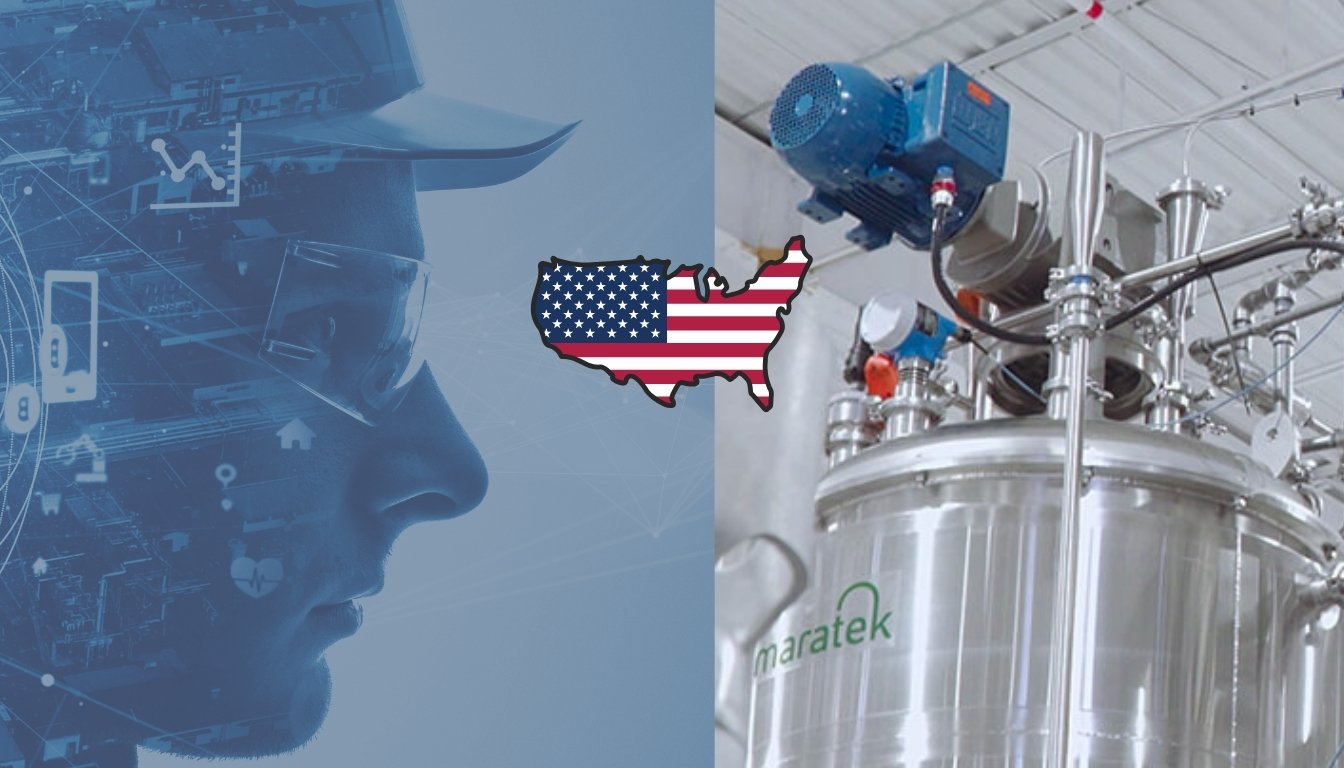
Choosing [solvent recovery equipment](https://www.maratek.com/industry-solutions) is not a one-size-fits-all decision. The right system depends on your solvent types and volumes, regulatory obligations, available floor space, capital or rental budget, and how quickly you need to demonstrate ROI. A system sized for a small printing shop will underperform in an automotive painting facility and an oversized continuous distillation unit brings unnecessary cost and complexity to a job shop running 10 gallons per week.
This guide gives US manufacturing and industrial waste managers a structured framework for evaluating and selecting solvent recovery systems in 2026 covering equipment types, selection criteria, compliance fit, cost considerations, and the purchase vs. rental decision.
### **What This Guide Covers**
1. Why solvent recovery equipment selection matters more in 2026
2. The five equipment categories and when to use each
3. A six-factor selection framework
4. Compliance fit by regulation type
5. Total cost of ownership vs. rental analysis
6. Questions to ask any supplier before purchasing
### **Why Equipment Selection Matters More in 2026**
Three trends are making [solvent recovery equipment selection](https://www.maratek.com/industry-solutions) more consequential than it was five years ago:
**1. Tightening EPA and State Air Regulations**
The EPA's ongoing revision of the National Emission Standards for Hazardous Air Pollutants (NESHAP) and state-level VOC rules particularly in California, Texas, and the Great Lakes states are pushing more facilities closer to their permitted emission thresholds. Selecting equipment with built-in vapor control is no longer optional for many operations.
**2. Rising Solvent and Disposal Costs**
Virgin solvent prices remain elevated following supply chain disruptions, and hazardous waste disposal costs have risen 15–30% in many US regions since 2022. The payback period for solvent recovery equipment has compressed significantly as a result making equipment selection a higher-stakes financial decision.
**3. ESG and Sustainability Reporting Pressure**
Publicly traded manufacturers and their supply chain partners face increasing pressure to report waste diversion, VOC reduction, and circular material use. The equipment you choose directly affects what you can credibly report.
### **The Five Categories of Solvent Recovery Equipment**
Understanding what each equipment type does and does not do well is the foundation of the selection process.
| **Equipment Type** | **How It Works** | **Best For** |
| --- | --- | --- |
| [Batch Distillation](https://www.maratek.com/solvent-saver-batch-premium) Units | Solvent loaded, heated to vaporization, vapor condensed and collected. Still bottoms removed between runs. | Multi-solvent facilities; low-to-mid volume; job shops; flexo printing |
| Continuous Distillation Systems | [Continuous solvent feed](https://www.maratek.com/batch-solvent-recycling-units-continuous) and recovery without batch interruptions. Higher throughput with metered output. | High-volume painting lines; automotive; large-scale industrial cleaning |
| Vacuum Distillation Systems | Operates at reduced pressure, allowing high-boiling-point solvents to be recovered at lower temperatures. | High-boiling solvents (NMP, glycol ethers); heat-sensitive materials; coatings |
| Explosion-Proof / Classified Area Units | Built to NEC Class I Div. 1 standards; nitrogen-blanketed vessels; explosion-proof motors and controls. | Flammable solvents (MEK, acetone, toluene, xylene); OSHA-regulated facilities |
| Wipe/Parts Washer Integrated Systems | Recovery integrated with parts washing equipment; closed-loop solvent reuse in the cleaning process itself. | Aerospace; precision manufacturing; metal fabrication; defense contractors |
Most facilities fall clearly into one primary category. Where there is ambiguity common with facilities running multiple solvents or serving multiple production lines, a batch system with capacity headroom is usually the more flexible starting point.
### **Six-Factor Selection Framework**
Use the following criteria to evaluate equipment options systematically. Each factor should be documented before you approach suppliers; it will accelerate quoting and prevent mismatched recommendations.
#### **Step 1: Identify Your Solvent Type(s) and Mixture Complexity**
The boiling point, flash point, and azeotropic behavior of your solvents determine which recovery technology is physically capable of separating them. Single-solvent operations (e.g., pure acetone or IPA) are the simplest case. Mixed-solvent streams (e.g., a blend of MEK, toluene, and acetone) may require fractional distillation or sequential recovery runs. High-boiling solvents (above 150°C) require vacuum-assisted systems. Provide your supplier with your Safety Data Sheets (SDS) and current waste characterization data.
#### **Step 2: Quantify Your Weekly Solvent Volume**
Batch distillation units are typically rated in gallons per cycle (5, 15, 30, 60, 110, 220 gallons are common sizes). Continuous systems are rated in gallons per hour. Calculate your average weekly spent solvent volume from your waste manifests or drum count. Size the unit to process your volume in 3–4 operating days, leaving headroom for production spikes. Undersizing is the most common purchasing mistake it leads to solvent backlogs and compliance gaps.
#### **Step 3: Map Your Regulatory Obligations**
Your equipment selection directly affects your compliance position under RCRA (hazardous waste), the Clean Air Act (VOC emissions), and OSHA (flammable liquid handling). Facilities near their LQG/SQG threshold under RCRA should prioritize maximum recovery rate. Facilities with air permits should prioritize vapor-controlled systems. Facilities handling flammable solvents must ensure equipment meets NEC Class I Division 1 requirements where applicable.
#### **Step 4: Assess Available Space and Utilities**
Batch units from 5 to 30 gallons can typically be installed in existing utility rooms with standard 120V or 240V power and adequate ventilation. Larger systems (60+ gallons, continuous flow) require dedicated floor space, 3-phase power, cooling water supply, and in some cases local exhaust ventilation or secondary containment. Measure your available footprint before requesting quotes it is a common constraint that eliminates otherwise suitable equipment.
#### **Step 5: Determine Capital vs. Rental Approach**
Purchase is appropriate when: solvent volumes are stable and predictable, you have capital budget approval, and your facility has a multi-year operational horizon at the same location. Rental is appropriate when: volumes fluctuate seasonally, you need to demonstrate ROI before capital commitment, your facility is leased, or you want maintenance and servicing included without internal capability. Maratek offers both ownership and rental programs rental units include preventive maintenance and can be sized up or down as your volumes change.
#### **Step 6: Evaluate Supplier Support Capability**
Equipment is only as reliable as the support behind it. Key questions: Does the supplier provide startup commissioning? What is their average response time for service calls in your region? Do they stock parts domestically? Can they assist with RCRA still bottom characterization documentation? Maratek has operated in North America since 1967 and provides direct technical support not third-party service networks.
### **Compliance Fit by Regulation: Equipment Selection Matrix**
Use this matrix to match your primary compliance driver to the equipment features that address it:
| **Primary Compliance Driver** | **Equipment Feature Required** | **Equipment Type(s)** |
| --- | --- | --- |
| RCRA Reduce hazardous waste volume / generator status | High recovery rate (85–95%); minimal still bottom residue | Batch distillation; continuous flow |
| RCRA Reclamation exemption eligibility | Closed-loop design with documented return to process | Continuous flow; integrated parts washer systems |
| Clean Air Act VOC emission caps | Vapor condensation / recovery during distillation process | Any unit with vapor recovery; continuous preferred |
| OSHA 29 CFR 1910.106 Flammable liquid handling | NEC Class I Div. 1 rated; explosion-proof motors; nitrogen blanket | Explosion-proof batch or continuous units |
| State Air Quality Permits | Throughput metering; audit-ready operational logs | Continuous flow with data output; any modern batch unit |
| ESG / Sustainability Reporting | Solvent-recovered volume tracking; CO2-equivalent calculations | Any unit with operational metering |
#### **Total Cost of Ownership vs. Rental: A Practical Analysis**
The financial case for solvent recovery equipment has strengthened considerably as disposal costs have risen. Here is a simplified framework for comparing ownership and rental:
| **Cost Factor** | **Ownership vs. Rental Consideration** |
| --- | --- |
| Capital outlay | Purchase: $8,000–$80,000+ depending on system size. Rental: monthly fee, no upfront capital. |
| Maintenance & service | Purchase: internal or contracted. Rental: typically included in Maratek rental programs. |
| Solvent savings (annual) | Both models deliver the same solvent savings typically $20,000–$100,000+/yr depending on volume and solvent cost. |
| Disposal cost reduction | Both models reduce hazardous waste disposal typically $5,000–$40,000/yr depending on current drum volume. |
| Payback period (purchase) | Most facilities achieve payback in 12–24 months at current solvent and disposal costs. |
| Flexibility | Rental allows sizing adjustments as volume changes. Purchase locks in capacity. |
| Tax treatment | Purchase may qualify for Section 179 deduction. Rental costs are typically fully deductible as an operating expense. |
***Tip: Calculate Your Break-Even Point** *
*Multiply your monthly spent solvent drums by your disposal cost per drum. Add your monthly virgin solvent spend. If the combined figure exceeds your equipment monthly cost (amortized purchase or rental fee), the system pays for itself in operating savings alone before compliance value is counted.*
#### **Questions to Ask Any Solvent Recovery Equipment Supplier**
Before committing to a purchase or rental, use these questions to evaluate supplier capability and equipment fit:
- What recovery rate can I expect with my specific solvent(s), and do you have data from comparable applications?
- How do I characterize the still bottoms under RCRA, and will you provide documentation support?
- What are the power, ventilation, and utility requirements for this unit at my volume?
- Is this unit rated for my solvent's flash point classification under NEC and OSHA standards?
- What is your average service response time in my region, and do you stock parts locally?
- What startup commissioning and operator training do you provide?
- For rental: what is included in the monthly fee, and what happens if I need to scale up?
- Can you provide references from facilities in my industry running similar solvent streams?
#### **Solvent Recovery Equipment Selection by Industry**
While the six-factor framework applies universally, each industry has common selection patterns:
| **Industry** | **Typical Equipment Recommendation** |
| --- | --- |
| [Paint & Coatings](https://www.maratek.com/ink-and-printing) Manufacturing | Batch or continuous distillation; vapor recovery required for air permit compliance; explosion-proof for flammable solvent blends |
| [Flexographic Printing](https://www.maratek.com/solvent-saver-flexo) | Batch distillation (15–60 gal); alcohol-based ink solvents (IPA, ethanol); standard electrical classification typically sufficient |
| [Automotive OEM & Tier 1](https://www.maratek.com/automotive) | Continuous flow or large-batch systems; high volume; OSHA and air permit compliance critical; integrated parts washer systems common |
| [Aerospace & Defense](https://www.maratek.com/marine-and-aerospace) | Explosion-proof units; strict solvent purity requirements for reclaimed material; documentation and traceability essential |
| [Cannabis / Hemp](https://www.maratek.com/cannabis-hemp-oil-recovery-extraction-equipment) Processing | Vacuum distillation for ethanol recovery; FDA-adjacent documentation expectations; stainless steel contact surfaces preferred |
| [Industrial Metal Fabrication](https://www.maratek.com/metal-finishing) | Parts washer integrated systems; chlorinated or petroleum solvent recovery; secondary containment requirements common |
| [Pharmaceutical / Chemical Processing](https://www.maratek.com/pharmaceuticals) | Fractional distillation for mixed-solvent streams; GMP documentation support; high purity recovery standards |
#### **Ready to Select the Right System? Talk to Maratek.**
[Maratek Environmental](https://www.maratek.com/) has supplied solvent recovery and recycling equipment to North American manufacturers since 1967. We work across paint and coatings, automotive, aerospace, flexographic printing, cannabis processing, and industrial manufacturing and we offer both purchase and rental programs to match your financial and operational model.
Our team will review your solvent types, volumes, and compliance situation and recommend the specific system that fits not the largest unit or the most expensive option, but the right one for your facility.
**[Contact Maratek](https://www.maratek.com/contact-us) to request a solvent recovery assessment for your facility. **Available for purchase or rental. Serving the US and Canada.
[](https://cta-redirect.hubspot.com/cta/redirect/243670/1ec42404-15fb-4078-bed1-cf0332959edc)
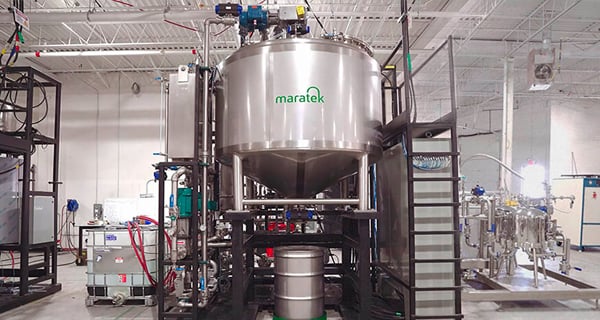
### Get a Quote for Maratek Solvent Equipment or Services
Maratek is the Market Leader in Professionally-Engineered Solvent Recycling and Botanical Extraction Technologies.
[](https://cta-redirect.hubspot.com/cta/redirect/243670/f15923da-3f5e-4639-ab01-4e6bae26d3a6)
### Subscribe To Email Updates:
### Recent Posts:
### Contact Us:

## How Much Can You Save? Find out now! Free Return On Investment Calculator.
[Calculate Your Savings](https://www.maratek.com/roi-calculator)
- [About Us](https://www.maratek.com/about)
- [Partnership Opportunities](https://www.maratek.com/partnership-opportunities)
- [Careers](https://www.maratek.com/careers)
- [Contact Us](https://www.maratek.com/contact-us)
- [Maratek Environmental Services](https://www.maratekenvironmental.com/)
**Visit us on Social**
Industrial Solvent Solutions
- [Industrial Solvent Applications](https://www.maratek.com/industry-applications)
- [Engineer to Order](https://www.maratek.com/engineer-to-order)
- [Solvent Recovery & Recycling](https://www.maratek.com/solvent-recycling-recovery)
- [Oil Recovery & Recycling](https://www.maratek.com/oil-recycling-equipment)
- [Wastewater Purification](https://www.maratek.com/wastewater-purification-treatment-equipment)
Engineering Solvent Solutions
- [Process Design](https://www.maratek.com/process-design)
- [Mechanical Design](https://www.maratek.com/mechanical-design)
- [Project Execution](https://www.maratek.com/project-execution)
Maratek Environmental
- [About Us](https://www.maratek.com/about)
- [Partnership Opportunities](https://www.maratek.com/partnership-opportunities)
- [Careers](https://www.maratek.com/careers)
- [Contact Us](https://www.maratek.com/contact-us)
- [Maratek Environmental Services](https://www.maratekenvironmental.com/)
Learn
- [Resources](https://www.maratek.com/resources)
- [ROI Calculator](https://www.maratek.com/roi-calculator)
- [FAQ](https://www.maratek.com/faq)
Contact Us
**Global: (905) 857-2738
1-800-667-6272**
**sales@maratek.com**
**Canada**
39 Nixon Road, Bolton, Ontario L7E 1K1, Canada
**United States**
250 Monroe Ave. NW, Suite 400, Grand Rapids, MI, 49503
**Germany**
Friedrichstr. 155, 10117 Berlin, Berlin Germany
**Spain**
Avda. de Europa 26 ATICA 5, 2ª planta, 28224 Pozuelo de Alarcón, Madrid, Spain
**UK**
207 Regent Street, Suite 8, Third Floor, W1B 3HH London, United Kingdom
**© 2026 Maratek All Rights Reserved | [Privacy Policy](https://www.maratek.com/privacy-policy) | [Sales Terms](https://www.maratek.com/sales-terms) | [ Maratek Environmental Liquid Waste Recycling Services](https://www.maratekenvironmental.com)**
**Canada | USA | Mexico | Germany | Spain | UK**

```json
{
"@context" : "https://schema.org",
"@type" : "Organization",
"address" : {
"@type" : "PostalAddress",
"addressCountry" : "CA",
"addressLocality" : "Bolton",
"addressRegion" : "ON",
"postalCode" : "L7E 1K1",
"streetAddress" : "39 Nixon Road"
},
"alternateName" : "Maratek",
"contactPoint" : [ {
"@type" : "ContactPoint",
"areaServed" : [ "CA", "US", "DE", "ES", "GB" ],
"contactType" : "sales",
"email" : "sales@maratek.com",
"telephone" : "+1-800-667-6272"
}, {
"@type" : "ContactPoint",
"contactType" : "customer support",
"email" : "service@maratek.com",
"telephone" : "+1-905-857-2738"
} ],
"description" : "Maratek Environmental Inc. designs and manufactures industrial solvent recovery and recycling equipment, serving the paint and coatings, printing, automotive, aerospace, chemical processing, cannabis/hemp, and battery manufacturing industries across North America and Europe.",
"email" : "sales@maratek.com",
"foundingDate" : "1967",
"location" : [ {
"@type" : "Place",
"address" : {
"@type" : "PostalAddress",
"addressCountry" : "US",
"addressLocality" : "Grand Rapids",
"addressRegion" : "MI",
"postalCode" : "49503",
"streetAddress" : "250 Monroe Ave. NW, Suite 400"
},
"name" : "Maratek USA"
}, {
"@type" : "Place",
"address" : {
"@type" : "PostalAddress",
"addressCountry" : "DE",
"addressLocality" : "Berlin",
"postalCode" : "10117",
"streetAddress" : "Friedrichstr. 155"
},
"name" : "Maratek Germany"
}, {
"@type" : "Place",
"address" : {
"@type" : "PostalAddress",
"addressCountry" : "ES",
"addressLocality" : "Pozuelo de Alarcon",
"addressRegion" : "Madrid",
"postalCode" : "28224",
"streetAddress" : "Avda. de Europa 26 ATICA 5, 2a planta"
},
"name" : "Maratek Spain"
}, {
"@type" : "Place",
"address" : {
"@type" : "PostalAddress",
"addressCountry" : "GB",
"addressLocality" : "London",
"postalCode" : "W1B 3HH",
"streetAddress" : "207 Regent Street, Suite 8, Third Floor"
},
"name" : "Maratek UK"
} ],
"logo" : "https://www.maratek.com/hubfs/maratek-logo.png",
"name" : "Maratek Environmental Inc.",
"sameAs" : [ "https://www.facebook.com/MaratekRecycle/", "https://www.linkedin.com/company/maratek-environmental-inc-/" ],
"telephone" : "+1-905-857-2738",
"url" : "https://www.maratek.com"
}
```
```json
{
"@context": "https://schema.org",
"@type": "Article",
"headline": "How to Choose Solvent Recovery Equipment in 2026: A Buyer's Guide for US Manufacturers",
"description": "This guide gives US manufacturing and industrial waste managers a structured framework for evaluating and selecting solvent recovery systems in 2026. ",
"image": "https://243670.fs1.hubspotusercontent-na1.net/hubfs/243670/2026/Blogs/US%20GUIDE%20b.jpeg",
"datePublished": "2026-07-10 12:48:57",
"dateModified": "1783687737392",
"author": {
"@type": "Person",
"name": "Colin Darcel"
},
"publisher": {
"@type": "Organization",
"name": "Maratek Environmental Inc.",
"logo": {
"@type": "ImageObject",
"url": "https://www.maratek.com/hubfs/maratek-logo.png"
}
},
"mainEntityOfPage": {
"@type": "WebPage",
"@id": "https://www.maratek.com/blog/how-to-choose-solvent-recovery-equipment-in-2026-a-buyers-guide-for-us-manufacturers"
}
}
```