Maratek Environmental Solvent Recycling Services
What Solvents Should Semiconductor Fabrication Facility Recover First?
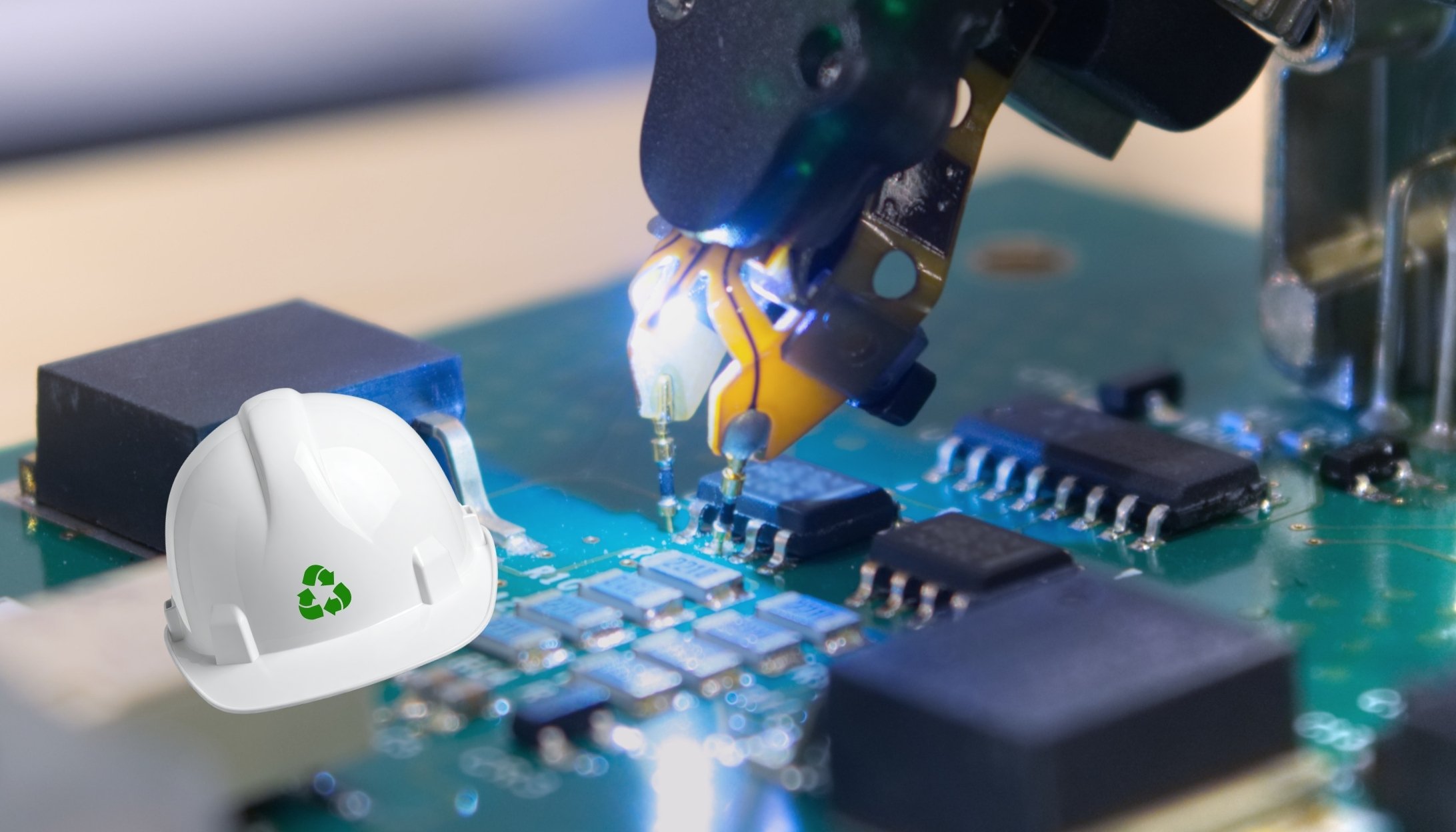 How Fabrication Facilities can reduce hazardous waste and reclaim high-value solvents by starting their recovery program with the two highest-volume chemicals on the floor.
Isopropyl alcohol (IPA) and N-Methyl-2-pyrrolidone (NMP) are the best solvents for a semiconductor fabrication facility ("fab") to recover first. Both are consumed at high volume, distill cleanly with well-documented recovery rates above 90%, and can often be reused or down-cycled into less-sensitive process steps without requalifying advanced lithography.
Semiconductor fabrication consumes more high-purity solvents than almost any other manufacturing process. IPA and NMP sit at the center of that consumption, used across wafer cleaning, drying, photoresist stripping, and precision rinsing. Both are produced and purchased at high purity, used briefly, and then typically discarded as hazardous waste at the moment they show any trace of contamination.
That pattern is expensive and, increasingly, unnecessary. For Fabrication Facilities evaluating solvent recovery for the first time, IPA and NMP are the natural starting point because both are high in volume, well understood from a distillation standpoint, and capable of recovery rates that make a strong first business case.
This guide explains why these two solvents are the right entry point for a semiconductor recovery program, how the recovery process works for each, and what to evaluate before bringing recovery equipment on-site.
Why Semiconductor Fabrication Facilities Generate So Much Solvent Waste
Wafer fabrication is solvent-intensive by design. IPA is used for wafer drying after rinsing steps and for general cleaning throughout the line, while NMP is used primarily as a photoresist stripper and in some etching and cleaning chemistries. Both are purchased at very high purity - often 99.9% or higher - because even trace particulate or metallic contamination can affect chip yield at advanced process nodes.
The challenge is that purity requirements work against waste reduction under a conventional single-use model. A solvent that picks up even minor contamination, a slight color shift, or trace moisture is generally pulled from the process and classified as spent, even though the bulk of the chemical is still structurally intact and recoverable.
The result is high-purity; high-cost solvent being discarded as hazardous waste at volumes that scale directly with production. For a fab running multiple shifts, that adds up to a significant and recurring cost line - one that most facilities have not benchmarked against the cost of recovering the solvent instead.
Why Start with IPA and NMP
Not every solvent used in a fab is an equally good fit for an initial recovery program. IPA and NMP are typically recommended as the starting point for three reasons:
1. They Are the Highest-Volume Solvents on the Floor
IPA in particular is consumed at high volume across wafer drying and general cleaning steps, making it one of the largest line items in most Fabrication Facilities solvent purchasing and disposal budgets. NMP, while used in narrower applications such as photoresist stripping, is typically purchased and disposed of in significant quantities as well. Starting recovery with the highest-volume solvents produces the largest and most immediate financial impact.
2. Both Are Well-Suited to Distillation Recovery
IPA and NMP both have well-defined boiling points and stable chemistry under controlled distillation conditions, making them straightforward candidates for vacuum or atmospheric distillation recovery. Recovery rates for IPA in semiconductor applications are commonly reported above 90%, and recovery rates exceeding 95% have been documented in NMP recovery systems used across electronics, battery, and pharmaceutical manufacturing. Contaminants - photoresist residue, particulates, trace metals, water - are left behind in the still bottoms, while the distilled solvent is condensed back into a reusable, high-purity stream.
3. Recovered Material Can Often Be Reused or DownCycled
Depending on a fab's internal purity specifications, recovered IPA and NMP can frequently be reintroduced directly into less-sensitive process steps - general cleaning or rinse applications, for example - even where the recovered material does not meet ultra-high-purity specs required for the most advanced lithography steps. This down-cycling approach allows facilities to capture value from recovered solvent without requalifying it for the most demanding applications first.
How IPA Recovery Works
Spent IPA from wafer drying and cleaning operations is collected and fed into a distillation system, where it is heated under controlled conditions to vaporize the alcohol while leaving particulates, trace organics, and other contaminants behind. The vapor is condensed back into liquid IPA and can be filtered or polished further depending on the purity required for its intended reuse.
Because IPA waste streams in semiconductor applications are typically dominated by IPA itself - often exceeding 65% concentration even after use - recovery rates tend to be high relative to more heavily contaminated industrial solvent streams. Combined recovery approaches, including distillation paired with adsorption polishing, have demonstrated recovery rates above 90% in semiconductor-specific waste streams.
How NMP Recovery Works
NMP recovery follows a similar distillation-based principle, typically under vacuum to protect the solvent from thermal degradation at the temperatures required for separation. Spent NMP - commonly contaminated with dissolved photoresist, polymer residue, or particulates - is heated in a controlled vacuum environment, vaporized, and condensed into clean, reusable solvent, leaving resin and particulate residue behind as still bottoms.
NMP recovery is now well established across multiple industries, including battery electrode manufacturing, where recovery systems commonly report solvent recycling efficiency above 95%, and pharmaceutical manufacturing, where recovery efficiency above 88% is typical. Electronics and semiconductor applications fall within this same range, with purity levels maintained above 97% in many implementations.
The Financial and Compliance Case
For Fabrication Facilities evaluating recovery for the first time, IPA and NMP recovery typically delivers value across three areas:
Reduced virgin solvent purchasing - recovered IPA and NMP offset purchases of new high-purity material, which represents a significant and recurring procurement cost given current high-purity solvent pricing
Lower hazardous waste disposal costs - on-site recovery reduces the volume of IPA and NMP waste requiring manifested off-site disposal or incineration, which is typically among the more expensive waste streams to manage given strict purity and contamination documentation requirements
Improved ESG and sustainability reporting - on-site solvent recovery generates measurable, auditable data that supports frameworks such as CDP, GRI, and SASB, which are increasingly relevant to semiconductor customers and investors evaluating supply chain sustainability
Many Fabrication Facilities assume recovery is not viable given strict purity specifications or limited cleanroom-adjacent space, but properly designed recovery systems are built to operate within these constraints and to integrate with existing waste segregation practices already in place at most facilities.
IPA vs. NMP: Quick Comparison
|
|
IPA |
NMP |
Why It Matters |
|
Primary use |
Wafer drying, general cleaning |
Photoresist stripping, etching |
Determines where in the process recovered solvent can be reused |
|
Typical recovery method |
Distillation, often with adsorption polishing |
Vacuum distillation |
Vacuum protects NMP from thermal degradation during recovery |
|
Typical recovery rate |
90%+ |
95%+ |
Both rank among the higher-yield solvents for distillation recovery |
|
Common contaminants |
Particulates, trace organics, moisture |
Dissolved photoresist, polymer residue |
Defines the still bottoms waste stream after recovery |
Figures reflect commonly reported industry recovery rates for IPA and NMP recovery systems and may vary by facility, waste stream composition, and equipment configuration.
Building Out a Full Semiconductor Recovery Program
Once IPA and NMP recovery is operating successfully, many Fabrication Facilities expand their recovery program to additional solvents used on the line, including PGMEA (propylene glycol monomethyl ether acetate), used extensively in photoresist processing, and acetone, used in various cleaning applications. Starting with IPA and NMP allows a facility to validate equipment performance, train operators, and establish a clear cost baseline before scaling a multi-solvent recovery program.
Evaluating Solvent Recovery for Your Fab?
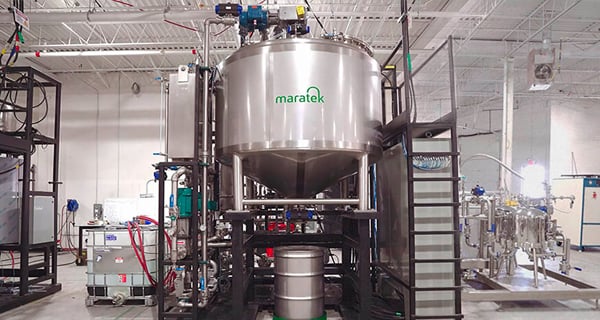
Maratek Environmental designs solvent recovery systems engineered for specific solvent chemistries, including high-purity solvents like IPA and NMP used across semiconductor manufacturing. We work with facilities to assess current solvent consumption and disposal costs and model the recovery rates and savings achievable for their specific process.
Contact us to discuss your facility's solvent recovery needs or request a cost-savings analysis.

Get a Quote for Maratek Solvent Equipment or Services
Maratek is the Market Leader in Professionally-Engineered Solvent Recycling and Botanical Extraction Technologies.